
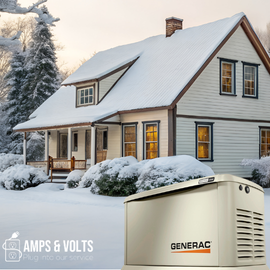
Winter in Northwest Indiana can bring it all — heavy snow, ice storms, and high winds that often lead to power outages. When that happens, your generator becomes your home’s lifeline. But just like any hardworking piece of equipment, your generator needs regular maintenance to make sure it’s ready when you need it most.
Here’s why keeping up with generator maintenance before the storm season hits is so important — and what we will do to keep your system running strong all winter long.
Why Generator Maintenance Matters
Generators work hard to keep your home powered during an outage. Over time, parts wear down, fluids thicken, and components can corrode — especially in cold, damp weather. Without regular maintenance, your generator may fail when you need it most, leaving you in the dark.
Routine maintenance helps:
Prevent breakdowns during extreme weather
Extend the lifespan of your generator
Keep your system running efficiently and safely
1. Check the Battery. Cold weather can drain your generator’s battery faster than you’d expect. Make sure the battery is fully charged and free of corrosion. Clean the terminals, tighten any loose connections, and if the battery is more than three years old, consider replacing it. A strong battery is essential for a quick, reliable start in freezing temperatures.
2. Change the Oil and Filter. Your generator’s engine depends on clean oil to run smoothly. Check oil levels regularly and follow the manufacturer’s schedule for oil and filter changes. In the winter, synthetic oil is a smart choice — it flows better in low temperatures, helping your generator start easily and run efficiently.
3. Inspect the Fuel System. Whether your generator runs on gasoline, propane, or diesel, make sure your fuel system is in good shape.
Keep tanks full and add stabilizer to gasoline to prevent it from breaking down.
Check all fuel lines for cracks or leaks.
Replace worn parts before they become a problem.
Clean fuel means a cleaner, more reliable burn — and fewer headaches when the power goes out.
4. Replace Air Filters and Spark Plugs. Your generator needs the right mix of air and fuel to run properly. A dirty air filter restricts airflow, and worn spark plugs make it harder for your generator to start. Check both and replace as needed to keep your generator operating efficiently.
5. Don’t Forget the Cooling System. If your generator is liquid-cooled, check the coolant level and top it off with the proper antifreeze. Make sure hoses and clamps are in good condition and look for any leaks. A well-maintained cooling system prevents your engine from freezing — literally.
6. Run It Regularly. Even if you don’t need backup power right now, it’s a good idea to run your generator for about 30 minutes each month. This keeps the engine lubricated, charges the battery, and ensures everything is in working order before you need it.
7. Inspect and Test Before the Snow Falls. Before winter sets in, take the time to inspect your generator for loose connections, corrosion, or worn parts. Test it under load to make sure it can handle your home’s power needs. Identifying issues early means no surprises when the next snowstorm hits.
Be Ready Before the Storm
Don’t wait until the lights go out to find out your generator won’t start. A quick maintenance check today can save you from big headaches later.
For expert generator maintenance, inspection, and repair, call Amps & Volts Electric at 219-462-FUSE (3873).
We’ll make sure your generator is ready to keep your home safe, warm, and powered all winter long.